Yoga can help in improving our physical and mental health as stress and sedentary habits like sitting too much harm our minds and bodies. Yoga is more than just stretching. It strengthens your body, calms your mind, and helps you reconnect with yourself. Yoga naturally improves your health. It can reduce anxiety, increase flexibility, and help you feel better. You don’t need experience or flexibility. You just need a mat, some time, and the desire to care for yourself.
This complete guide explains how yoga creates total body fitness and a stress free life, helping you build perfect health.

What Is Yoga?
Yoga comes from the Sanskrit word “yuj,” meaning “to unite.” It brings together body, mind, and spirit. Yoga started as meditation thousands of years ago. People saw yoga as a spiritual practice that helps the body and mind. Today it combines physical poses, breathing exercises, and meditation. “Yogasan” means yoga poses or posture. “Yoga” is the Western version of the original word “Yog.” Similarly, “Surya” is the Western version of “Sury,” and “Asanas” is the Western version of “Asans.”
Different yoga teachers, “Gurus” have created their own versions of Sun Salutation with small changes to the poses and chants. There are also different types of yoga practiced at different times.
There are many yoga styles, from gentle restorative yoga to intense power yoga. Every person and goal has a style that fits. Today, yoga is easy to find, you can take classes online, in studios, or even at work.
When is International Yoga Day celebrated?
International Yoga Day, also known as the International Day of Yoga or World Yoga Day, is celebrated every year on June 21, the longest day of the year in the Northern Hemisphere, known as the Summer Solstice. This date was chosen for its deep significance in yoga and ancient Indian traditions. The long day symbolises light, energy, and awareness, values that yoga has always stood for.
How did International Yoga Day begin?
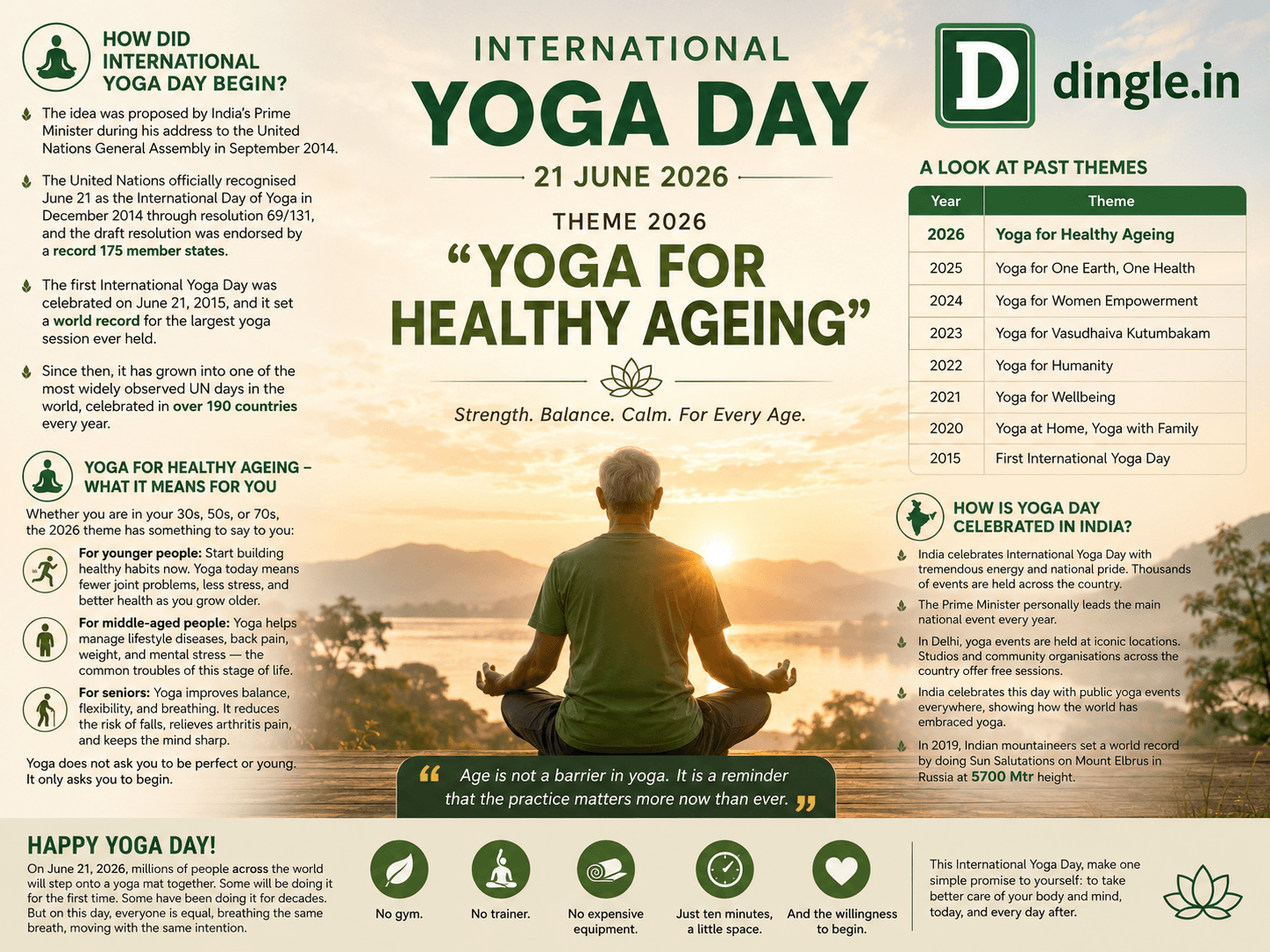
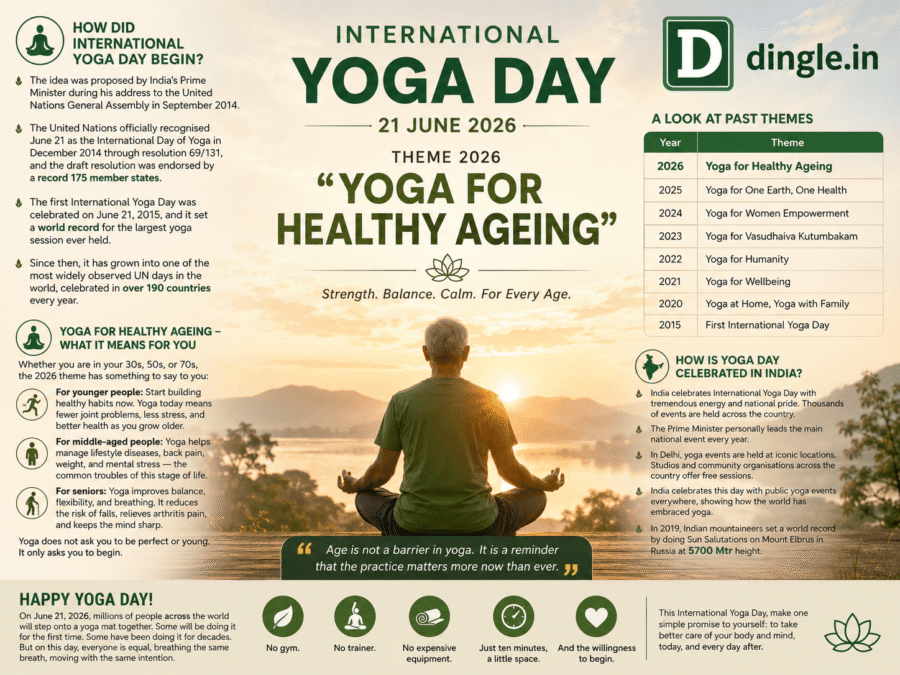
The idea was proposed by India’s Prime Minister Narendra Modi during his address to the United Nations General Assembly in September 2014. The United Nations officially recognised June 21 as the International Day of Yoga in December 2014 through resolution 69/131, and the draft resolution was endorsed by a record 175 member states.
The first International Yoga Day was celebrated on June 21, 2015, and it set a world record for the largest yoga session ever held.
Since then, it has grown into one of the most widely observed UN days in the world, celebrated in over 190 countries every year.
Theme of International Yoga Day 2026
Every year, International Yoga Day carries a theme, a message that the world focuses on together. The 2026 theme is:
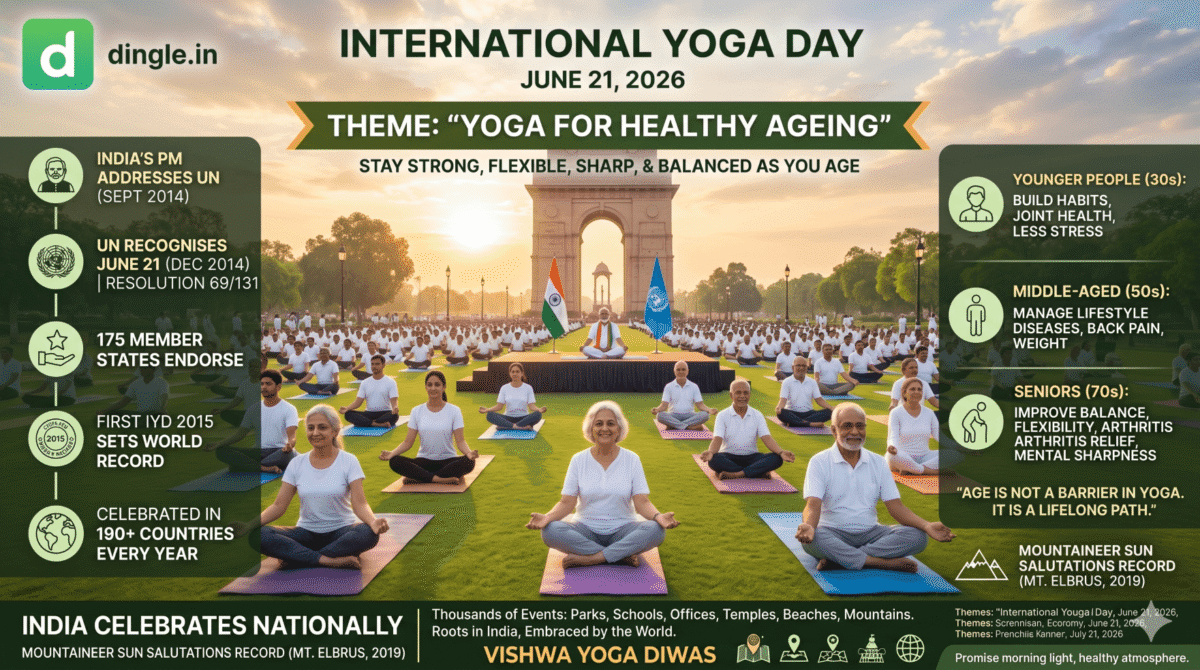
“Yoga for Healthy Ageing”
This theme shines a light on one of yoga’s most underrecognised gifts, helping people age with strength, dignity, and joy. The ancient texts always described yoga as a lifelong path, one that becomes richer and more essential as the body and mind move through the decades.
The theme is a direct response to a global reality. The world’s population is ageing faster than at any point in history. Yoga offers a gentle, proven, and accessible way for people of all ages, especially older adults, to stay strong, flexible, mentally sharp, and emotionally balanced.
Think about it, you do not need to be young and flexible to do yoga. A 60 year old with stiff joints can benefit just as much as a 25 year old athlete. That is the beauty of yoga, and that is exactly what this year’s theme celebrates.
Yoga for Healthy Ageing — What It Means for You
Whether you are in your 30s, 50s, or 70s, the 2026 theme has something to say to you:
- For younger people: Start building healthy habits now. Yoga today means fewer joint problems, less stress, and better health as you grow older.
- For middle-aged people: Yoga helps manage lifestyle diseases, back pain, weight, and mental stress — the common troubles of this stage of life.
- For seniors: Yoga improves balance, flexibility, and breathing. It reduces the risk of falls, relieves arthritis pain, and keeps the mind sharp.
Yoga does not ask you to be perfect or young. It only asks you to begin.
“Age is not a barrier in yoga. It is a reminder that the practice matters more now than ever.”
A Look at Past Themes
| Year | Theme |
|---|---|
| 2026 | Yoga for Healthy Ageing |
| 2025 | Yoga for One Earth, One Health |
| 2024 | Yoga for Women Empowerment |
| 2023 | Yoga for Vasudhaiva Kutumbakam |
| 2022 | Yoga for Humanity |
| 2021 | Yoga for Wellbeing |
| 2020 | Yoga at Home, Yoga with Family |
| 2015 | First International Yoga Day |
How is Yoga Day Celebrated in India?
India celebrates International Yoga Day with tremendous energy and national pride. Thousands of events are held across the country, in parks, schools, offices, temples, beaches, and even mountain peaks. The Prime Minister personally leads the main national event every year.
In Delhi, yoga events are held at iconic locations. Studios and community organisations across the country offer free sessions to welcome newcomers, making June 21 one of the best days of the year to try yoga for the first time.
For Indian readers, this day is especially meaningful, because yoga was born in India. When the world comes together on June 21 to practice yoga, it is celebrating something that has its roots right here.
India celebrates this day with public yoga events everywhere, showing how the world has embraced yoga.
In 2019, Indian mountaineers set a world record by doing Sun Salutations on Mount Elbrus in Russia at 5700 Mtr height.
Happy Yoga Day
On June 21, 2026, millions of people across the world will step onto a yoga mat together. Some will be doing it for the first time. Some have been doing it for decades. But on this day, everyone is equal, breathing the same breath, moving with the same intention.
You do not need a gym, a trainer, or expensive equipment. You need ten minutes, a little space, and the willingness to begin.
This International Yoga Day, make one simple promise to yourself: to take better care of your body and mind, today, and every day after.
Physical Benefits of Yoga
According to yoga teachers i.e. Yoga gurus, and ancient manuals and scriptures i.e. texts, regular yoga has positive effects on the body.
Flexibility & Balance
One of the first changes people notice with regular yoga practice is increased flexibility. Whether it’s touching your toes or holding a Virabhadrasana (Warrior III pose), yoga helps elongate muscles and loosen tight joints.
Balance improves too, not just physically, but mentally. Practicing Vrikshasana (Tree Pose) or Garudasana (Eagle Pose) teaches stability and focus skills that translate into everyday life.
“You do not have to be flexible to do yoga. You do yoga to become flexible.” — Unknown
Strength & Core Stability
People often think yoga won’t build strength, but it does. Poses like Plank, Chaturanga, and Boat Pose use your body weight to work your core, glutes, arms, and legs. This builds muscle tone and stability. Over time, you’ll have better posture, fewer injuries, and less chronic pain in your lower back and neck.
Cardiovascular Health
Yoga is good for your heart. It improves blood flow, lowers blood pressure, and teaches you to breathe deeply. Active yoga styles like Vinyasa or Ashtanga give you a light cardio workout that builds endurance and strengthens your heart. It helps control blood sugar, which can help manage diabetes.
Mental Health Benefits of Yoga
Yoga helps in Reducing Stress and Anxiety
Yoga enhances our mood and mental health. It reduces stress and anxiety.
Yoga’s breathing and movements calm your nervous system and help your body relax. Poses like Balasana (Child’s Pose) and Viparita Karani (Legs-Up-The-Wall) are especially good for reducing stress hormones,that is it lower cortisol levels. Regular yoga helps you manage emotions better, sleep better, and feel less anxious. It’s a natural way to fight stress.
What is Cortisol?
Cortisol is a stress hormone made by glands near your kidneys. It helps your body handle stress and keeps your blood sugar stable. Your cortisol is high in the morning and drops during the day. Too much cortisol from chronic stress can cause weight gain and health problems. Too little cortisol makes you very tired. Managing stress helps keep cortisol balanced.
Yoga helps in Improving Focus and Mental Clarity
Yoga teaches you to focus on the present moment. It helps your mind let go of distractions. Studies show that regular yoga improves brain function, memory, and decision-making skills that help you succeed at work and in life.
Physical and Mental Health Wellness by Yoga
Boosting Immunity
Yoga reduces stress and inflammation, which helps your immune system work better. Gentle twisting poses and upside-down poses also stimulate the lymphatic system that is it help your body remove toxins and move infection fighting cells around (circulates white blood cells). Yoga improves blood flow, which can help prevent hair loss.
inflammation
Inflammation is your body’s way of fighting germs and healing wounds. It causes redness, swelling, and pain in the hurt area. This is good when you’re injured or sick. But sometimes inflammation doesn’t stop and becomes harmful. Long-term inflammation can cause serious diseases. You can reduce bad inflammation with good food, exercise, and sleep.
Yoga helps in Weight Management and Detoxification
It doesn’t burn as many calories as high intensity Interval workouts (HIIT), but yoga helps in other ways. It boosts your metabolism, helps you eat more mindfully, and improves digestion. The breathing exercises help your body detox and balance hormones, which are important for healthy weight control. Regular practice makes our skin radiant. It regulates weight gain. Regular Surya Namaskar helps in improving digestion.
High Intensity Interval Workouts (HIIT)
HIIT involves short bursts of intense exercise followed by brief rest periods. You work at maximum effort for 20-30 seconds, then rest, and repeat this cycle for 15-20 minutes. This method burns more calories than regular cardio and keeps burning them for hours after your workout. Common exercises include burpees, jump squats, and sprints that can be done anywhere with no equipment. It’s time-efficient and improves both fitness and fat loss quickly.
Enhancing Sleep Quality
Gentle yoga styles like Yin Yoga and Yoga Nidra calm your body and nervous system before bed. When you do yoga regularly, it helps you fall asleep easier (prevents insomnia) and sleep more deeply.
Best Yoga Poses or Yogasan or Yoga postures
Yogasan (योगासन) refers to the physical postures or “asanas” practiced in Yoga to promote physical health, mental balance, and spiritual growth. While “Yoga” is a broad discipline including meditation and ethics, Yogasan specifically focuses on the body’s positions.
“Yoga is the journey of the self, through the self, to the self.” — The Bhagavad Gita
Surya Namaskar (Sun Salutation)
This is an all in one Yogasan (posture or ose) for physical and mental fitness.
Surya Namaskar means “Salute to the Sun.” It combines 12 different yoga poses into one flowing sequence. Each pose has a special chant called a mantra. Many yoga teachers call Surya Namaskar the “King of Yoga.”
One round of Sun Salutations equals 108 regular yoga poses. In Hindu tradition, the sun gives life to everything.
The mantras are chants in Sanskrit that praise God. Sanskrit is considered God’s language, so each pose has its own Sanskrit mantra.
If you’re not comfortable with chanting, you can skip the mantras and just do the Sun Salutation poses.
Benefits of Surya Namaskar
Yoga teachers and ancient texts say that doing Surya Namaskar regularly helps your body in many ways.
Surya Namaskar improves your mood and mental health. It reduces stress and worry. It helps control blood sugar, which is good for people with diabetes. Better blood flow can prevent hair loss and make your skin glow.
Regular practice helps you maintain a healthy weight and digest food better. It strengthens your body and improves your posture. Overall, it keeps you healthy and prevents diseases.
Surya Namaskar benefits your whole body from head to toe. It helps your mind, heart, stomach, and legs. This is why many people consider it the best yoga practice.
People who follow ancient practices believe that regular Surya Namaskar also boosts creativity and intuition.
What is Intuition?
Intuition is knowing something instantly without having to think about it. It’s like a “gut feeling” or inner sense that tells you something without needing proof or explanation.
History and Origin of Surya Namaskar
The practice of Surya Namaskar is hundreds of years old. In the 1920s, Bhawanrao Shriniwasrao Pant Pratinidhi wrote about it in his book “The Ten-Point Way to Health: Surya Namaskars.” This was the first written record of this old practice.
Some historians think Surya Namaskar was created in the 1800s. This isn’t true because the chants or “Shlokas” used in Surya Namaskar are much older. These historians said the poses weren’t real yoga positions. Some yoga experts even said only people who didn’t know better practiced Surya Namaskar. They didn’t think it belonged in yoga.
Krishnamacharya, known as “the father of modern yoga,” got ideas from an 1896 book called Vyayam Dipika. Some Surya Namaskar poses look like “Dand,” which Indian wrestlers used as exercise. This shows that fitness exercises became part of modern yoga. Surya Namaskar uses little physical energy, making it a light exercise. Yoga is proven to be the most helpful and safest form of exercise that requires the least effort.
“Yoga does not just change the way we see things, it transforms the person who sees.” — B.K.S. Iyengar
How to do Surya Namaskar?
Surya Namaskar is a way to honor the sun. It has 12 different poses, each with its own “Chant, Mantra or Shlokas”. People usually do it early in the morning at sunrise, but you can do it whenever works for you.
Practice in a quiet, peaceful place. You can do it inside or outside, whatever you prefer. Use a flat surface or a yoga mat. The pictures below show each pose of Surya Namaskar with its chant and meaning.
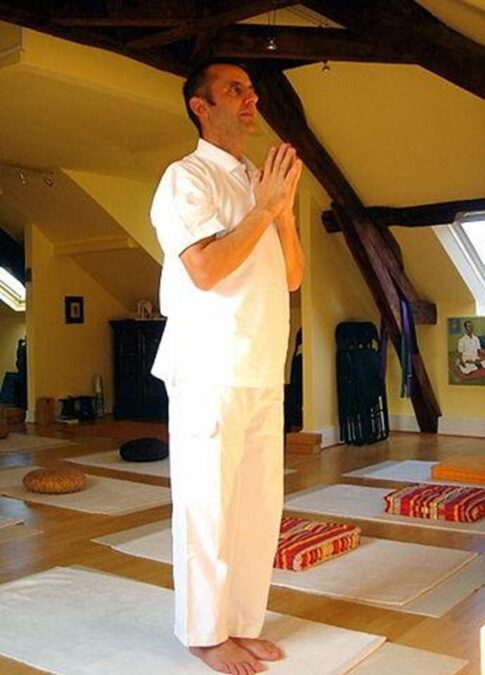
Part 1 – Pranamasan
This is also called the Prayer pose. This position helps keep your body balanced and calms your nervous system.
“Chant, Mantra or Shlokas”
ॐ मित्राय नमः – “Om Mitraaya Namaha” means One who is friendly to all.

Part 2 – Hasta Uttanasana
This is also called the “Raised Arms Pose” or “Tadasan” or “Mountain Pose.” This stretch helps your chest and lungs take in more oxygen. It also stretches and strengthens your stomach muscles.
“Chant, Mantra or Shlokas”
ॐ रवये नमः – “Om Ravaye Namaha”, means the shining one, or the radiant one.

Part 3 – PadHastasan or HastaPadasan or Uttanasan
This is also called the “standing forward bend” or “Hand to Foot Pose.” This position stretches your hamstring muscles and bends your waist and spine.
“Chant, Mantra or Shlokas”
ॐ सूर्याय नम: – “Om Ravaye Namaha”, means “To the one who removes darkness and creates activity.”

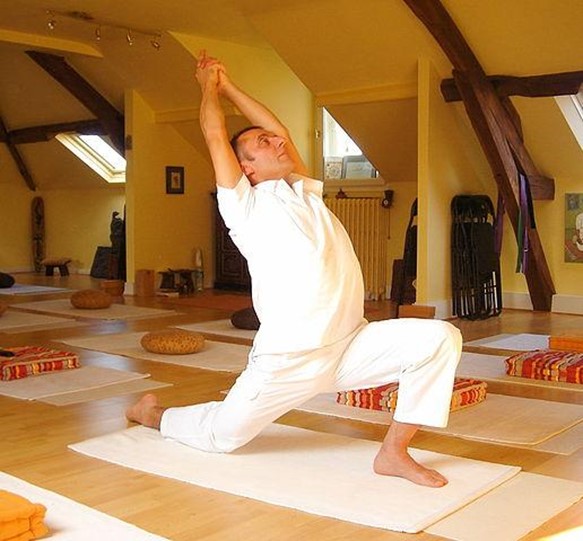
Part 4 – Anjaneyasana or Ashwa Sanchalanasana
This is also called the “Equestrian Pose” or “Crescent Moon Pose.” This position bends your neck and spine, which helps with digestion problems, constipation, and sciatica. It also makes your leg muscles stronger.
“Chant, Mantra or Shlokas”
ॐ भानवे नमः – “Om Bhaanave Namaha” means “To the bright one” or “To the one who brings light.”
Part 5 – Adho Mukha Shvanasana
This pose is also called “Dandasan” or “Downward-facing Pose.” It helps improve your posture and stretches your shoulders and chest.
“Chant, Mantra or Shlokas”
ॐ खगाय नमः – “Om Khagaya Namaha” means “To the one who is everywhere” or “To the one who moves across the sky.”
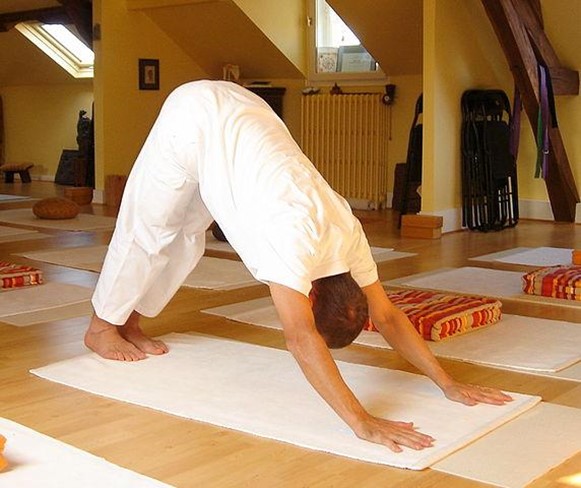
Part 6 – Ashtanga Namaskara
This pose is also called “Ashtang Dandavat Pranam” or “Chest, Knees and Chin pose.” It helps reduce stress and anxiety. This position makes your spine and back muscles more flexible.
“Chant, Mantra or Shlokas”
ॐ पूष्णे नमः – “Om Pooshne Namaha” means “To the one who gives nourishment and fulfillment.”

Part 7 – Urdhva Mukha Shvanasana or Bhujangasana
This is an “Upward Facing Pose.” It helps your heart and makes your whole body more flexible. It also improves your mood.
“Chant, Mantra or Shlokas”
ॐ हिरण्यगर्भाय नमः – “Om Hiranya Garbhaya Namaha” means “To the one who shines with golden light.”
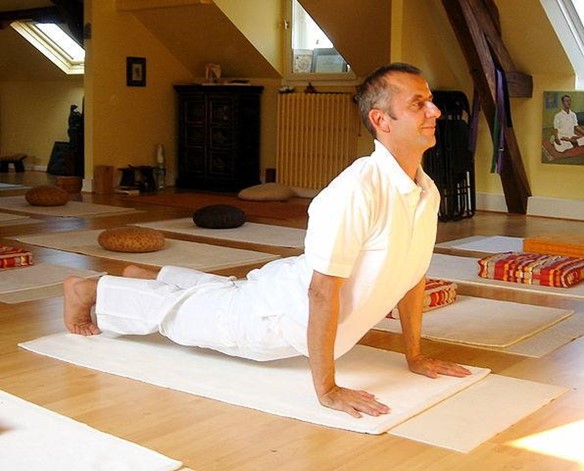
Part 8 – Adho Mukha Shvanasana
This pose is also called “Dandasan” or “Downward facing Pose.” It helps improve your posture and stretches your shoulders and chest.
“Chant, Mantra or Shlokas”
ॐ मरीचये नमः – “Om Mareechaye Namaha” means, Giver of light with infinite rays.

Part 9 – Anjaneyasana or Ashwa Sanchalanasana
This is also called the “Equestrian Pose” or “Crescent Moon Pose.” This position bends your neck and spine, which helps with digestion problems, constipation, and sciatica. It also makes your leg muscles stronger.
“Chant, Mantra or Shlokas”
ॐ आदित्याय नम: – “Om Aadityaaya Namaha” means The son of Aditi, the cosmic divine mother.

Part 10 – PadHastasan or HastaPadasan or Uttanasan
This is also called the “standing forward bend” or “Hand to Foot Pose.” This position stretches your hamstring muscles and bends your waist and spine.
“Chant, Mantra or Shlokas”
ॐ सवित्रे नमः – “Om Savitre Namaha” means One who is responsible for life.
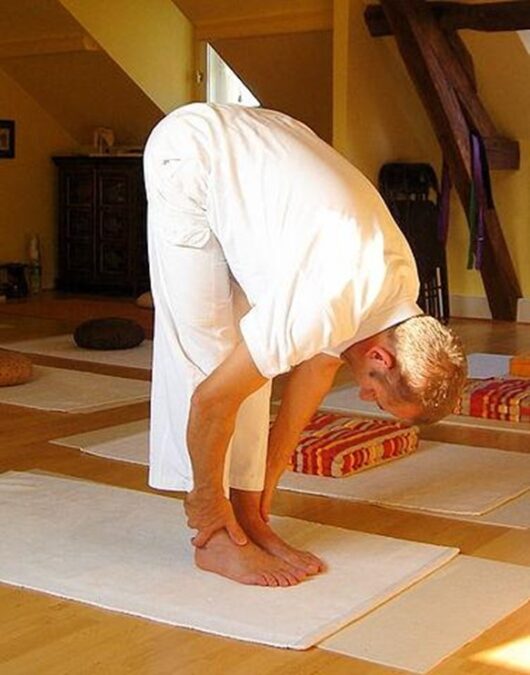
Part 11 – Hasta Uttanasana
This is called the “Raised Arms Pose” or “Mountain Pose.” This stretch helps your chest and lungs take in more oxygen. It also stretches and strengthens your stomach muscles.
“Chant, Mantra or Shlokas”
ॐ अर्काय नमः – “Om Arkaaya Namaha” means One who is worthy of praise and glory.
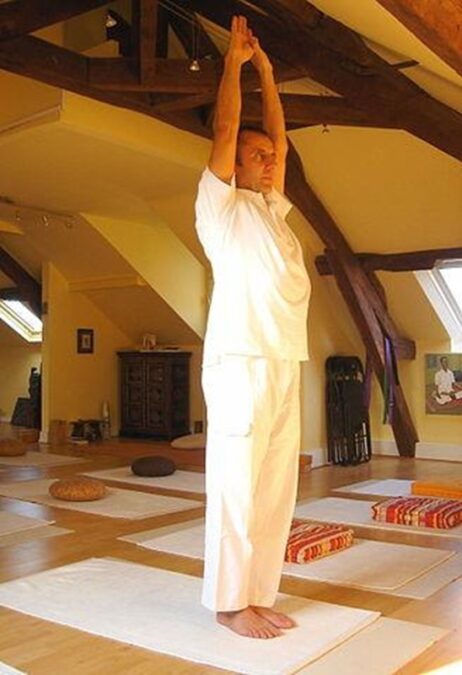
Part – 12 Pranamasan
This is also called the Prayer pose. This position helps keep your body balanced and calms your nervous system.
“Chant, Mantra or Shlokas”
ॐ भास्कराय नमः – “Om Bhaskaraya Namaha” means Giver of wisdom and cosmic illumination.
Important Yoga Poses Beyond Surya Namaskar
These five yoga poses build on Sun Namaskar. Each one helps your body and mind in different ways. Together, they make a complete yoga routine.
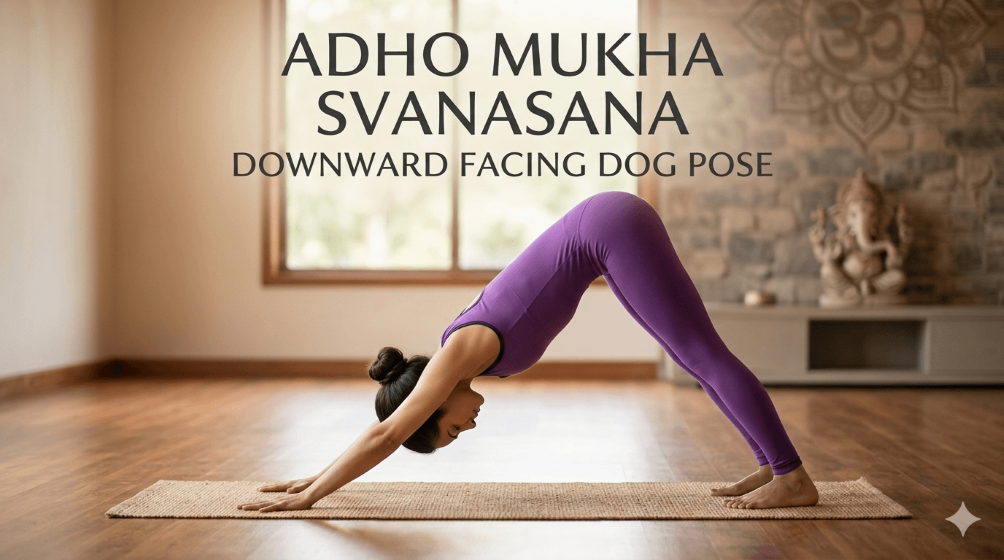
Adho Mukha Svanasana (Downward Dog)
Full Body Stretch and Energizer
This upside-down pose stretches your whole body and makes you stronger. It sends blood to your brain for energy. It stretches your legs and shoulders and strengthens your arms and core. It’s good for warming up or cooling down.
Key Benefits:
- Makes you feel more energetic and improves blood circulation
- Makes your arms, chest, and stomach stronger
- Makes your spine and legs longer and more flexible
- Calms the nervous system despite being energizing
Baalasana (Child’s Pose)
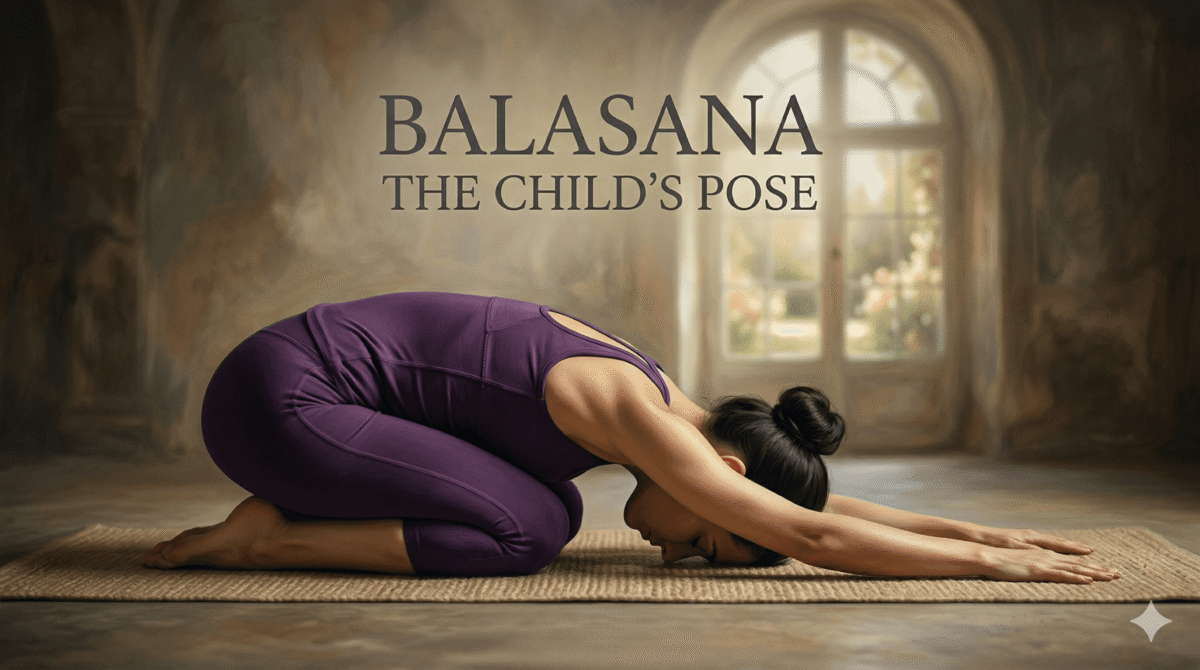
Deep Relaxation and Grounding
Child’s Pose is a relaxing position that helps you feel calm and peaceful. You kneel down, spread your knees apart, and reach your arms forward. This pose makes you feel safe and grounded. It helps reduce stress, worry, and tiredness. The gentle pressure on your stomach helps with digestion, and the position naturally slows your heart rate and calms your mind.
Key Benefits:
- Helps you feel less stressed and worried i.e. anxiety
- Gives your back and hips a gentle stretch
- Makes you feel safe and relaxed
- Good for digestion and relaxation
Setu Bandhasana (Bridge Pose)
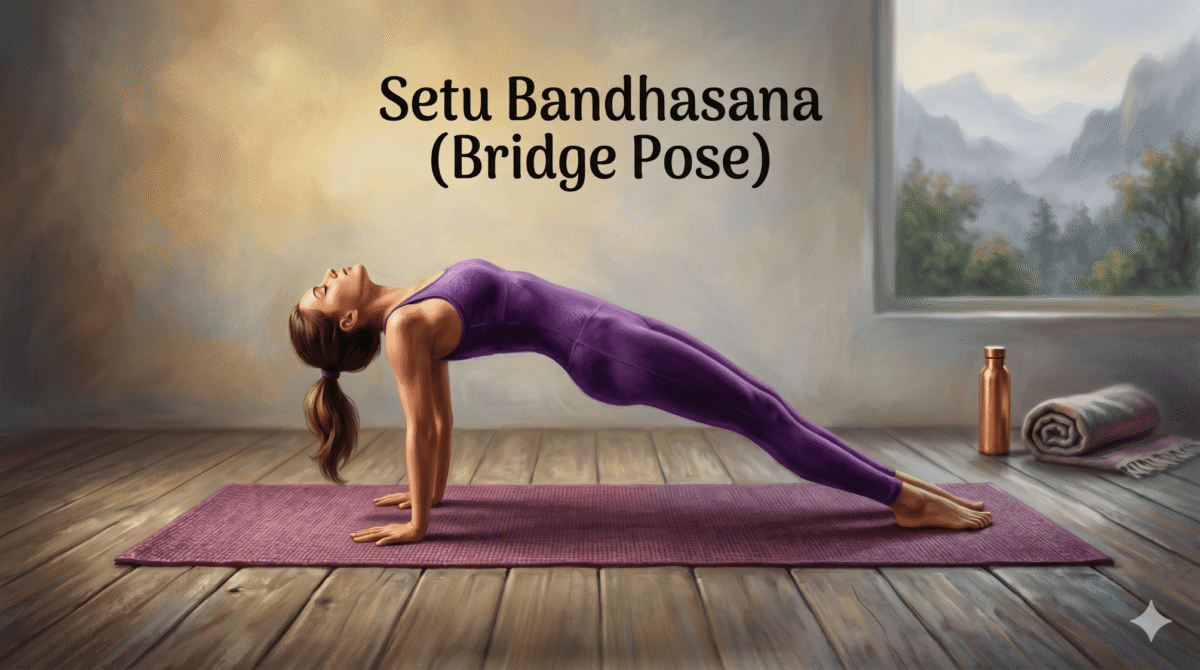
Opens Chest and Strengthens Glutes
Bridge Pose is a gentle back bend that helps fix problems from sitting too much. You lie on your back and lift your hips up. This opens your chest and stretches your hip muscles while making your glutes, hamstrings, and back stronger. It’s great for better posture and can help with lower back pain if you do it regularly. Opening your chest also helps you breathe deeper and can make you feel better emotionally.
Key Benefits:
- Strengthens your back, glutes, and hamstrings
- Opens your chest and helps you stand straighter
- Activates your thyroid and calms your nerves
- Helps you feel less depressed and stressed
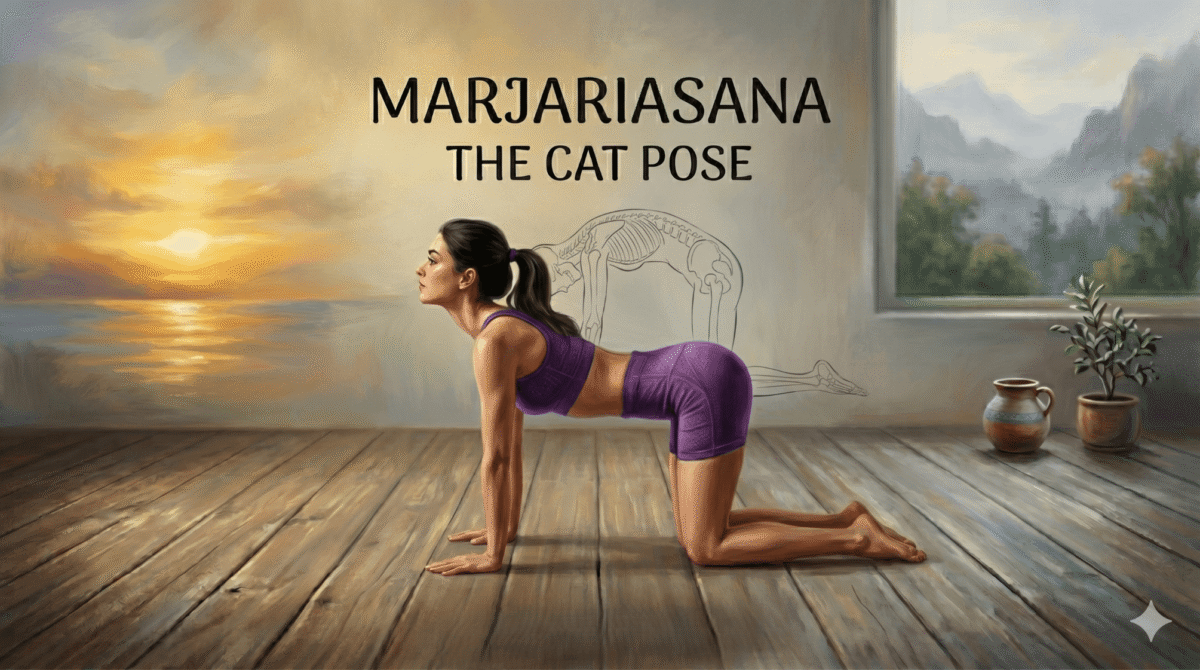
Marjaryasana Bitilasana (Cat-Cow)
Spinal Flexibility and Stress Relief
This flowing movement between two poses helps your whole spine move better. Cat-Cow keeps your spine healthy by making it more flexible and helping it align properly. Moving back and forth with your breathing is relaxing and reduces stress. It’s especially good if you sit a lot or have a stiff back.
Key Benefits:
- Helps your spine move better and become more flexible
- Gently massages your internal organs
- Makes your posture better and straightens your spine
- Calms you down through gentle, focused movement
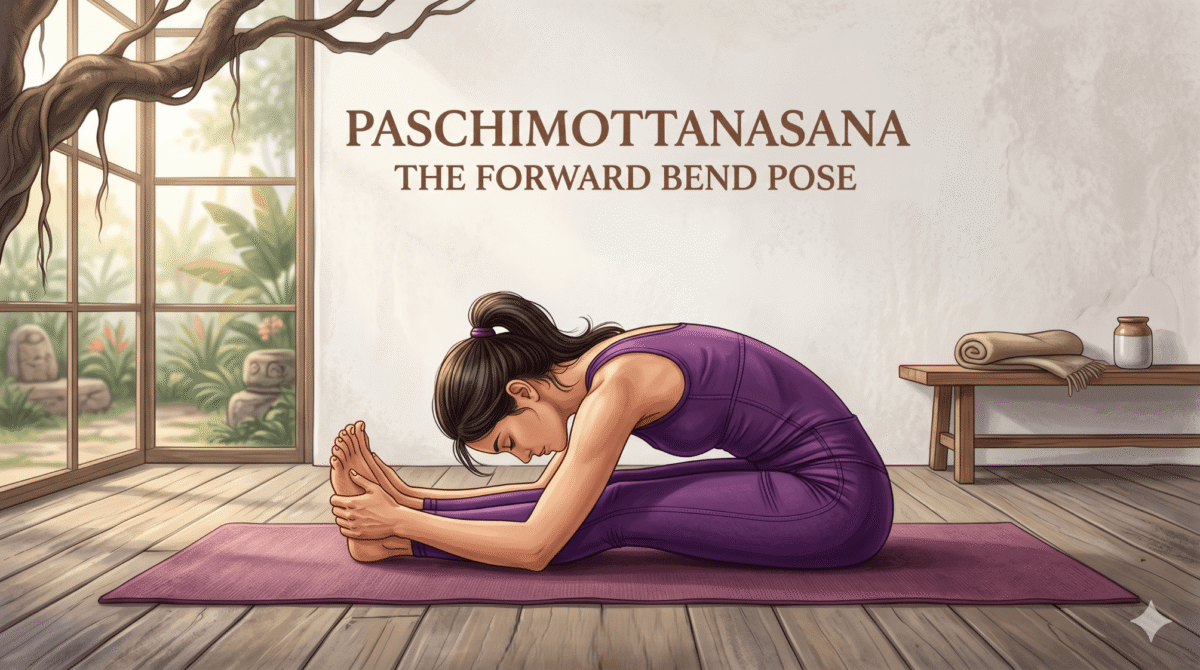
Paschimottanasana (Seated Forward Fold)
Calming for the Nervous System
This seated forward fold is a calming pose where you sit and bend forward. It helps your nervous system relax and reduces stress. The pose gives your hamstrings, spine, and shoulders a deep stretch while helping you think clearly and feel peaceful. People often do this pose at the end of practice to get ready for meditation or rest.
Key Benefits:
- Soothes your nerves and calms your thoughts
- Gives your whole back body a stretch
- Good for digestion and fights fatigue
- Encourages deep thinking and mental clarity
Creating Your Practice & Routine
These five yoga poses work well together and make a complete practice. Start with Marjaryasana Bitilasana or Cat-Cow to warm up your spine, then do Adho Mukha Svanasana or Downward Dog for energy. Next, practice Setu Bandhasana or Bridge Pose for strength and to open your chest. Follow with Paschimottanasana or Seated Forward Fold to calm down, and finish with Baalasana or Child’s Pose to deeply relax.
Each Yogasana or pose helps you differently, and together they balance strength, flexibility, energy, and relaxation. Practicing these Yogasana or poses regularly, plus Surya Namaskar, helps keep you healthy and feeling good.
Daily Routine for Wellness
Morning: 10-15 minutes of Sun Salutations to boost energy
Midday: Gentle stretches to fight desk stiffness
Evening: Relaxing poses or Yoga Nidra to unwind
Conclusion
Yoga helps you reach your full potential. It makes you stronger, more flexible, and calmer while boosting your immune system. It’s a complete way to stay healthy. Get your mat, take a deep breath, and start becoming fitter and healthier, one pose at a time.
Take care.
FAQs
Q: How often should I practice yoga for best results?
A: Do it 3-5 times a week, even if only for 20-30 minutes.
Q: Is yoga suitable for beginners or older adults?
A: Yes! There are beginner and senior classes available online and in personal health coaching.
Q: Can yoga really help with stress?
A: Absolutely. Breathing techniques, meditation, and calming poses all help reduce cortisol and anxiety levels.